


Italian National Research Council (CNR – Consiglio Nazionale delle Ricerche) is Italy’s largest public research institution. Founded in 1923, it promotes innovation and scientific growth across multiple disciplines, including medicine, environment, and engineering. With over 8,000 researchers and a network of 91 institutes, CNR is a key player in the European Research Area, fostering partnerships with industry and universities to transform basic science into socio-economic value.
The Institute for Polymers, Composites and Biomaterials (IPCB) is a specialized branch of the National Research Council of Italy (CNR), resulting from the merger of prestigious research units
The IPCB is a global reference point for materials science, focusing on the design, synthesis, and characterization of advanced polymeric systems. Its research pillars include:
Sustainability & Circular Economy: Developing bio-based polymers and innovative recycling processes to reduce plastic waste.
Advanced Manufacturing: Researching composite materials for the aerospace and automotive industries, including 3D printing technologies.
Health & Life Sciences: Designing biocompatible materials for tissue engineering, drug delivery, and diagnostic devices.
With strong ties to both academia and international industry, IPCB-CNR facilitates the “lab-to-market” transition, providing high-level scientific support for the EU Green Deal goals.

Maria Laura Di Lorenzo, CNR-IPCB, Italy
Maria Laura Di Lorenzo is Research Director at Italian National Research Council (CNR), Institute of Polymers, Composites and Biomaterials (IPCB). She is the author of three books published by Springer, three patents, and more than 150 articles published in JCR journals that have received nearly 8,000 citations (Scopus).
Dr. Di Lorenzo's main research interests focus on polymer crystallization and melting, bio-based and biodegradable polymers, polymer blends and composites for food packaging.
Since 2017 (first edition), Maria Laura Di Lorenzo is in World's Top 2% Scientists, the ranking developed by Stanford University and published in the Elsevier Data Repository. She ranks 1st among CNR active researchers in “Polymers”, DOI: 10.17632/btchxktzyw.8.
Dr. Di Lorenzo is Senior Editor of Thermal Advances (Elsevier) and member of the Editorial Board of: Thermochimica Acta (Elsevier), International Journal of Polymer Science (Wiley), Advances in Materials Science and Engineering (Wiley), Thermo (MDPI), Reviews on Advanced Materials Science (De Gruyter), Polymers (MDPI).
The Water Research Institute (IRSA) is a prominent branch of the National Research Council of Italy (CNR), dedicated to the scientific study and sustainable management of water resources. Headquartered in Monterotondo (Rome), with specialized units in Brugherio, Bari, Taranto, and Verbania, IRSA serves as the primary technical-scientific advisor to Italian institutions on water protection and policy.
The institute focuses on three main pillars:
Water Quality & Ecosystems: Monitoring chemical and biological contaminants in groundwater, rivers, and lakes to preserve biodiversity and public health.
Waste Treatment & Circular Economy: Developing advanced technologies for wastewater purification, sewage sludge recovery, and the extraction of high-value bioproducts from waste.
Hydrology & Climate Change: Assessing the impact of extreme weather events on water availability and designing resilient management strategies for drought and flooding.
By integrating analytical chemistry, microbiology, and engineering, CNR-IRSA provides the innovation necessary to comply with the EU Water Framework Directive and support a sustainable “Blue Economy.”

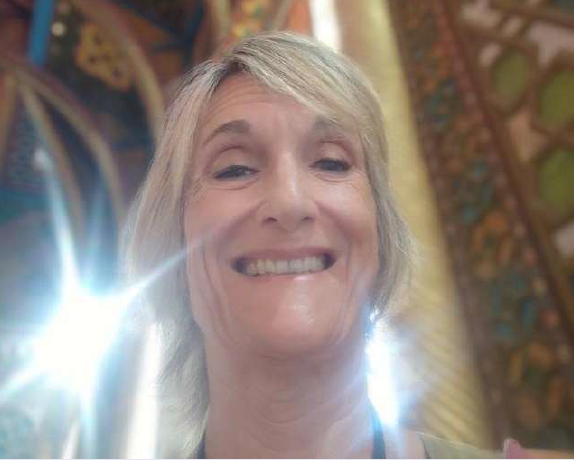
Camilla Braguglia, CNR-IRSA, Italy
Camilla Braguglia is Senior Scientist of the Water Research Institute
(IRSA) of the Italian National Research Council (CNR), where she leads
since 2008 the Research team on Waste Treatment and Valorization.
She graduated in Chemistry at the University of Rome La Sapienza and
obtained a PhD in Industrial Chemical Processes from the same
University. Her main research interests falls within the broad area of
environmental biotechnology for waste biodegradation,
decontamination and biomass valorization, in particular bioenergy and
chemicals production. The approach is to study and develop efficient
technological solutions with particular attention to the fundamental
aspects of the processes together with the technological transferability.
She (co)-authored 90 articles in peer-reviewed ISI Journals and
International Book chapters, and is co-inventor of two patents on waste
valorization through anaerobic bioprocesses.