The Project

ABOUT BORN PROJECT

BORN: BiObased theRmal-resistaNt food packaging

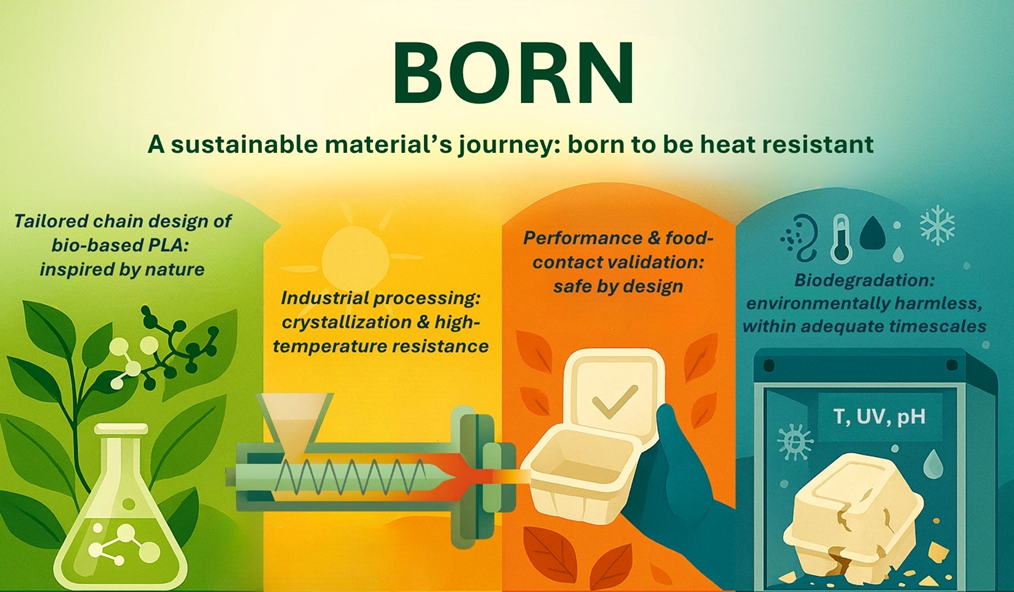
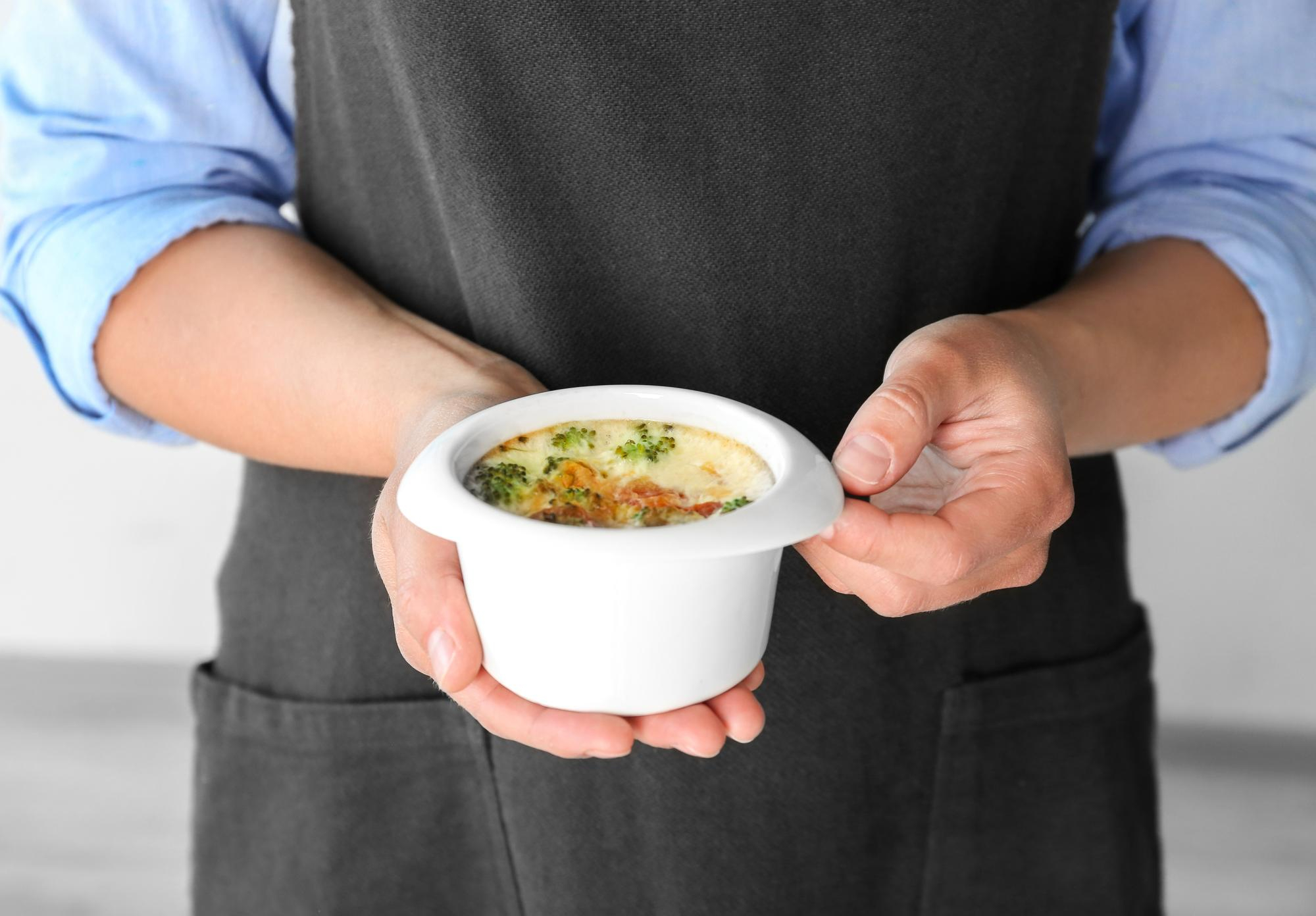
BORN is a bio-based low-cost polymer formulation that can be used to fabricate biodegradable thermal-resistant food packaging, as well as a variety of products that require resistance to high temperature. This is a groundbreaking innovation for biodegradable and biobased polymers that can generally withstand temperatures not higher than 50-55 °C. BORN material is produced via safe and sustainable by design, using nature inspired polymers and additives. The latter mainly consist of novel and patentable crystal nucleating agent, whose inclusion in formulations allows crystallization upon industrial processing of polymers that are otherwise amorphous. This leads to improved resistance to high temperatures (100 °C) and allows to foresee a portfolio of applications for BORN, which, for food packaging, may include compostable microwavable containers for ready-to-eat meals, as well as low-cost cups for hot beverages.

BORN may be used also in agriculture (eg. filler for mulching films), for reusable consumer goods, as well as for all applications where resistance to high temperatures is mandatory. The novel BORN material will be circular, biobased, biodegradable, compostable, suitable for food contact, recyclable, as well as low cost. Currently, there is no material and no relative technology that simultaneously fulfills all these features. This will be a breakthrough in the production and transformation of biodegradable and biobased plastics, able to disrupt the market of biobased food packaging.

The proposal spans the whole BORN lifecycle, from conception and birth of sustainable additives, to design and formulation of novel sustainable materials, followed by production of lab scale prototypes and testing of their suitability for food packaging, up to their end of life. Biodegradation will be validated in open, controlled and extreme environments, also including hazard assessment of materials at their end-of-life.

1 - PLA conception
Development of advanced PLA (polylactic acid) formulations for heat resistant sustainable packaging
2 - Production & Testing
Innovative SSbD manufacturing and rigorous performance evaluation
3 - End-of-Life Solutions
Focus on recyclability and safe biodegradation in controlled and open environments
4 – Sustainability
Life Cycle Assessment integrated with Techno-Economic Analysis

Applications

Sustainable, low cost, thermal resistant PLA for food packaging, agriculture, reusable consumer goods, packaging for pharmaceuticals.  

Goals

Development of a new additive improving PLA crystallization rate, tested also for other bio-polymers (PHB, PHBV, PEF). Deliver packaging solutions truly sustainable from birth to end-of-life.
PARTNERS
8 partners

BORN consortium consists of partners from 5 EU countries (Italy, Germany, Sweden, Spain and Poland) and 1 Associated country (Switzerland). It brings together 2 Large Public Research Institutions (CNR, FHG), 3 Universities (UNINA, PUT, KTH) and 3 SMEs (QUANTIS, IEXC, TECNO). BORN partners assembles gather strong complementary and interdisciplinary expertise, covering the fields of Polymer science, Materials engineering, Food sciences and Social sciences.

Strengths
  • Highly efficient nucleating agent, specific for PLA, to be tested also for other bio-based polymers (eg. PHB, PHBV, PEF)
  • PLA formulation with high crystallization rate
  • Thermal resistant food packaging
  • Wide range of applications (agriculture, consumer goods, etc.)
  • Biodegradation as a ‘system property’
  • Evaluation of additives release, transformation products and micro(bio)plastics which could pose harm to the environment
  • SPHERE framework for LCA
Exploitation strategy
  • Technology, commercial and IP surveillance activities will be carried out within and outside the Consortium network, searching for the most suitable markets and bio-based industrial sectors.
  • CNR has its own Office for Research Valorization to receive expert guidance and training to improve the project strategy towards effective identification and exploitation of key exploitable results
Strategy will include:
  • Mapping and categorizing stakeholders and potential key partnerships
  • Engage with strategic partners and stakeholders identified through market and demand analysis
  • Access to new markets through multipliers, like Enterprise Europe Network (CNR is an active member)